Water science
Why Sparkling Water Goes Flat
The hiss when you open a bottle is the start of a change. Pressure and temperature help explain why the last sip can feel quieter than the first.
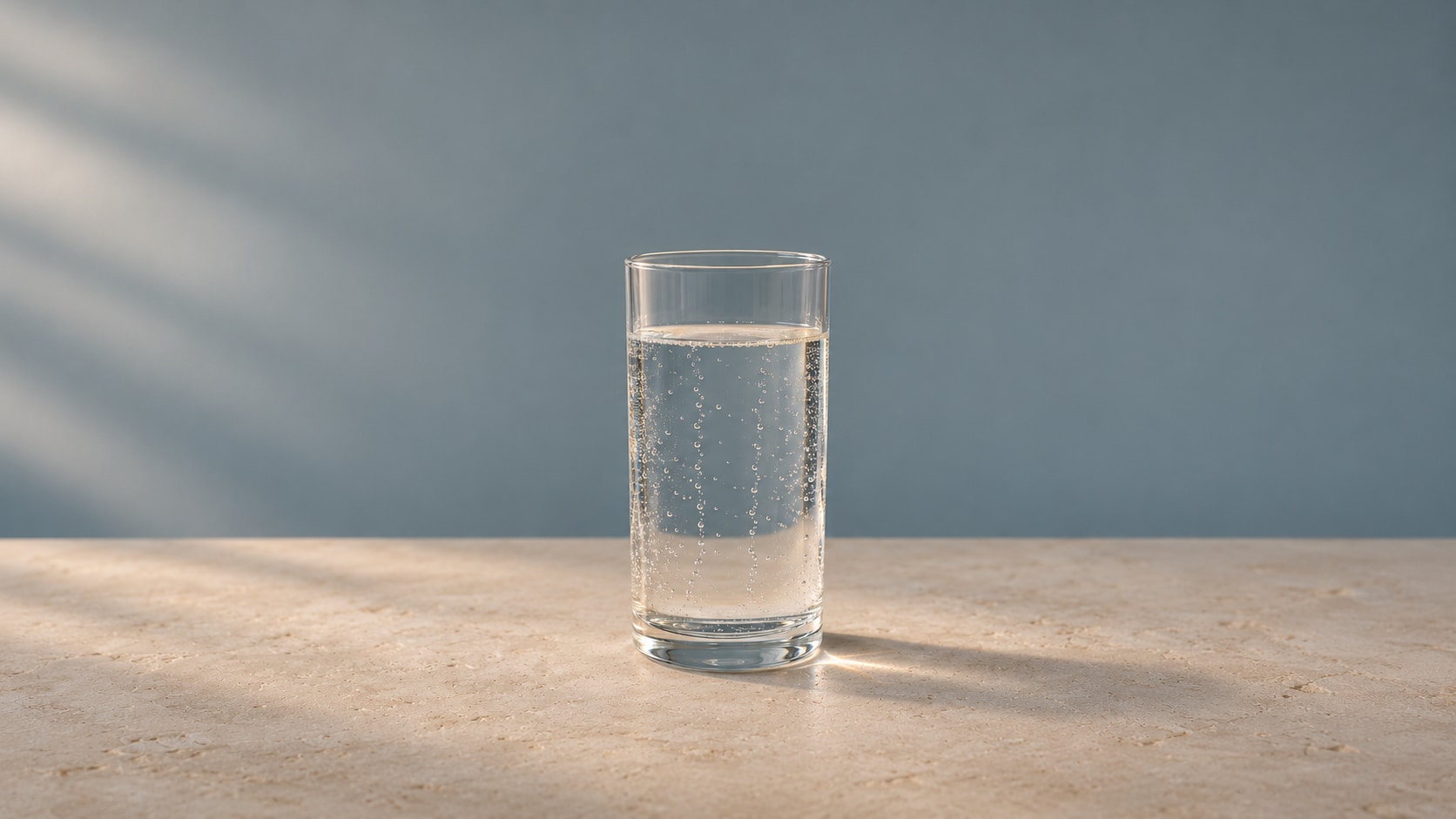
Open a bottle of sparkling water and you hear a short hiss. Pour it into a glass and bubbles rise toward the surface. Leave the glass on the table through dinner and the next sip may feel much less lively.
The fizz comes from carbon dioxide dissolved in the water. Opening the bottle changes the conditions that helped keep that gas there.
What the hiss tells you
Inside a sealed bottle, the space above the water contains carbon dioxide under pressure. Once you open it, that pressure drops. Some of the dissolved gas comes out of the water, forming the bubbles you see.
The first burst is only the beginning. The water continues releasing carbon dioxide as it adjusts to the air around it. Eventually, enough has escaped that the drink tastes flat. The Open University’s explanation of fizzy drinks
Temperature changes how much gas water holds
At a given carbon dioxide pressure, colder water can hold more dissolved carbon dioxide than warmer water. The University of Florida’s food science guide identifies pressure and temperature as the main factors controlling carbonation. UF/IFAS guide to carbonation
That makes chilling the bottle before opening a sensible starting point when you want a fizzy drink. It also explains why temperature belongs in a discussion of carbonation alongside the cap. Keeping a drink cold and keeping its container closed affect different parts of the same balance.
Pour when you’re ready to drink
For the table, leave a bottle closed until people are ready for it. Pour a little at a time if you prefer a fresh fizz with each serving. Those are simple serving choices based on how carbonation behaves, rather than a guarantee about how long a particular bottle will stay lively.
A glass of sparkling water has already begun to change by the time it reaches your place setting. If you’re serving both still and sparkling water, keep the options easy to tell apart and let guests choose their pour. There’s more on arranging the table in Set Out the Water Before Dinner.
Editorial · not medical advice