Water science
Why Water Boils Below 100°C in the Mountains
A mountain kettle can reach a full boil below 100°C. Lower air pressure changes the temperature, with practical consequences for the cup you brew.
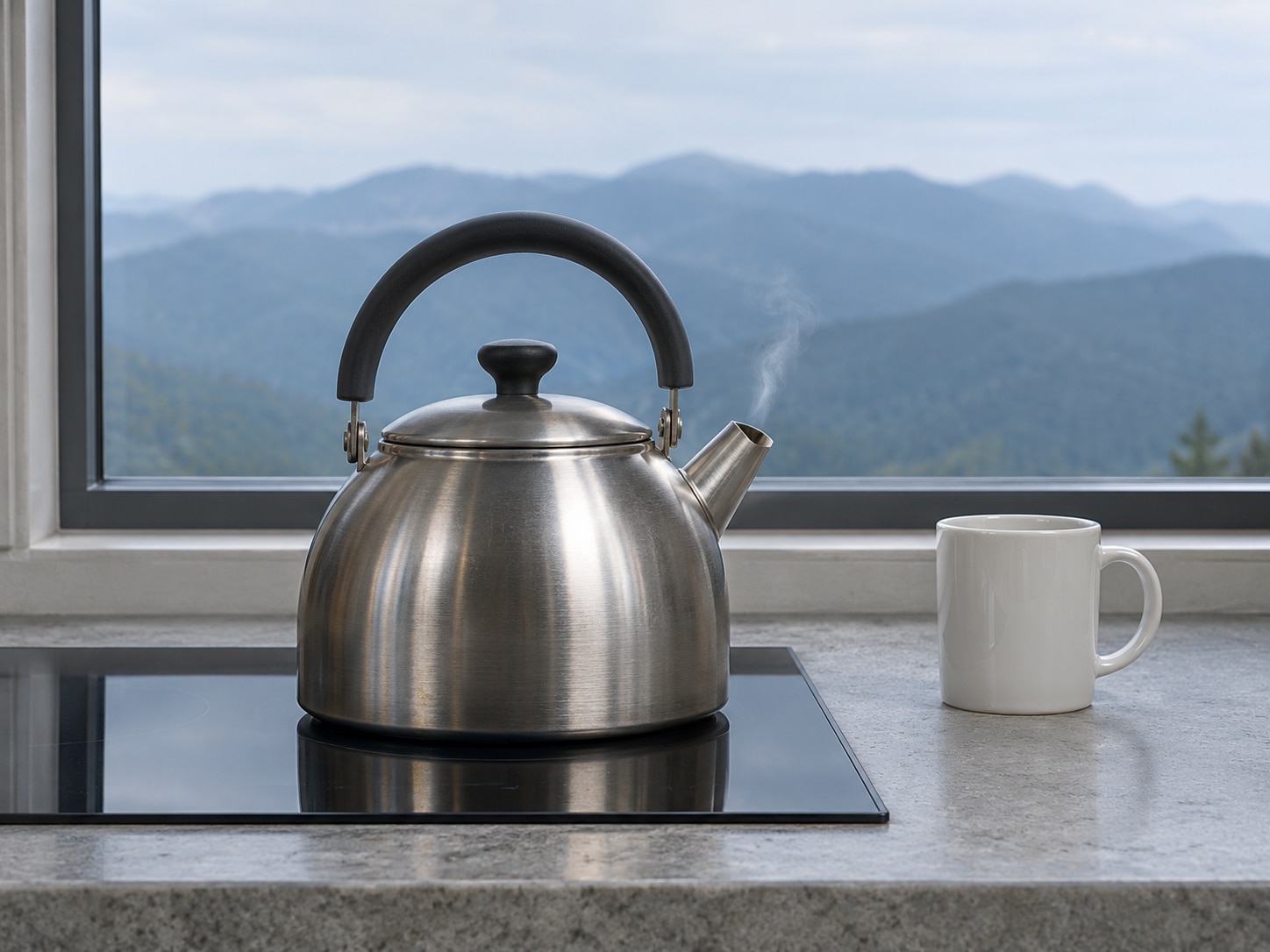
A kettle boils in a mountain kitchen just as visibly as it does near the coast. The temperature of the water can be different.
The familiar 100°C, or 212°F, boiling point is a reference for water at standard atmospheric pressure. Higher up, the surrounding air exerts less pressure, and water reaches a boil at a lower temperature. A full boil does not always mean 100°C.
The air around the kettle matters
Air has weight and exerts pressure. As elevation increases, atmospheric pressure generally falls. NOAA’s air-pressure guide explains that air becomes less dense with height; there are fewer air molecules in a given volume.
Water’s boiling point responds to that surrounding pressure. As water gets hotter, its vapor pressure rises. Boiling occurs when that vapor pressure matches the pressure around the liquid, as OpenStax’s chemistry text explains.
For an open vessel, the atmosphere supplies that surrounding pressure. With less pressure to match in the mountains, the boiling point is lower. This explanation concerns an ordinary open vessel, rather than water inside pressurized equipment.
How much lower?
Colorado State University Extension’s elevation guide gives these approximate reference values:
| Elevation | Boiling temperature |
|---|---|
| Sea level | 212°F / 100°C |
| 5,000 feet | 203°F / 95°C |
The Celsius figures are conversions of the guide’s Fahrenheit values. These are rounded examples, not a thermometer reading for every kitchen at those elevations. Actual atmospheric pressure also changes with the weather, so elevation alone does not supply an exact daily boiling temperature.
The change has a consequence that can seem backwards: food simmering in water may need longer cooking at higher elevation, because the boiling liquid is cooler. New Mexico State University Extension describes this effect for foods cooked with moist heat. A lower boiling point does not mean faster cooking.
A harder boil does not solve it
Turning up the burner makes boiling more vigorous. For water already boiling at a steady surrounding pressure, that extra heat goes into converting liquid to vapor rather than continually raising the liquid’s temperature.
OpenStax describes this distinction in its explanation of heating curves. Keeping an open kettle boiling harder will not make it reach a sea-level boiling temperature when the local pressure sets a lower one.
For your next mountain cup
If you follow a coffee or tea recipe by temperature, keep that temperature in your notes alongside the dose and brewing time. “Just off the boil” describes a different starting temperature at elevation than it does near sea level. Follow your kettle’s operating instructions, including any guidance for high-elevation use.
A change in location can also mean a change in the water’s mineral composition. Our guide to water in coffee and tea covers that separate influence. A different cup after a trip does not, by itself, identify which variable changed.
For a useful comparison, record the water, preparation and temperature you actually used. The bubbles tell you that the kettle has reached a boil; they do not give you a universal thermometer reading.
Sources
- NOAA JetStream: Air Pressure
- OpenStax Chemistry 2e: Phase Transitions
- Colorado State University Extension: High Elevation Food Preparation Guide
- New Mexico State University Extension: High-Altitude Cooking
Sources checked November 21, 2026.
Editorial · not medical advice