Water science
Why Water Leaves Spots on Clean Glasses
A droplet can dry and leave a pale mark behind. Here’s what those spots can tell you about the rinse water and what to check when a glass stays cloudy.
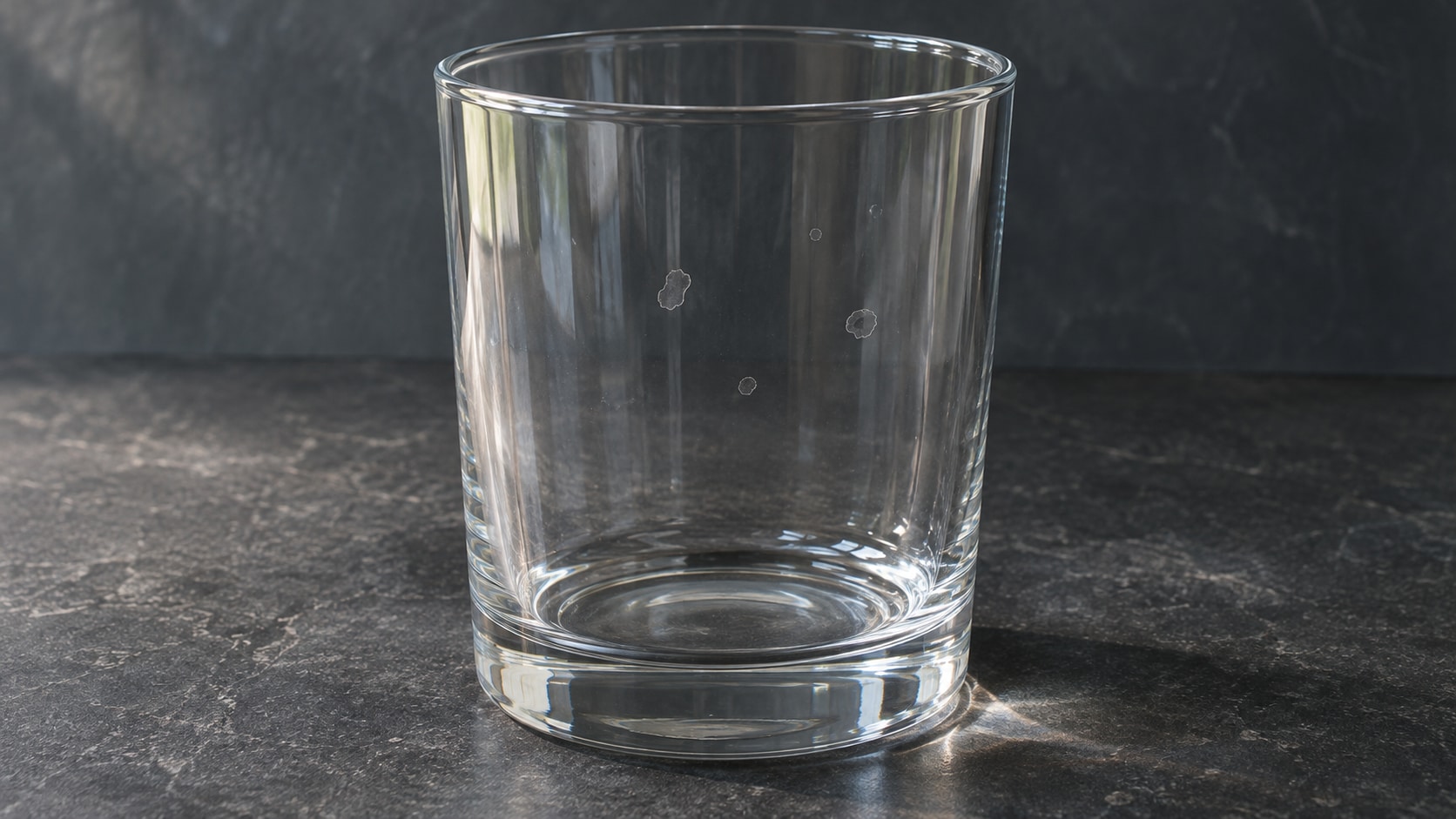
A glass can look clear as you take it out of the dishwasher. Once it’s dry, tilt it toward the window and you might see a scattering of pale rings. The last few drops of rinse water can leave a trace even when the glass is clean.
What’s left after a drop dries
As a droplet evaporates, dissolved minerals become more concentrated in the water that’s left. Some can settle onto the glass as a visible deposit. A drying drop can leave a small ring. Where many drops dry together, the deposits can look more like a film.
Calcium and magnesium contribute to water hardness. If you want to know how hard your tap water is, look for a published value or ask your water supplier. Counting spots can’t give you that number. In Phoenix, for example, the city traces its tap water hardness to minerals picked up as source water travels toward its treatment plants. City of Phoenix water FAQ
Check whether the mark is on the glass
A deposit sits on the surface. Etching is a change to the glass itself and can look like a haze that persists after cleaning. Dishwasher troubleshooting also lists detergent residue and rinse aid issues among the possible causes of spotting or film. The appearance alone won’t tell you which one you’re seeing. Whirlpool guide to film and etching
For a glass that’s already clean, try drying it with a soft, lint-free towel after the next rinse. If the same rings show up only where droplets air-dry, you’ve narrowed down when the marks form. If a whole load keeps coming out cloudy, look up your dishwasher’s guidance for your water hardness and check the instructions for the glassware before changing the wash routine.
Editorial · not medical advice