
Water science
Why Ponds Freeze From the Top
A pond can have a sheet of ice at the surface and liquid water below. The explanation starts a few degrees above freezing.
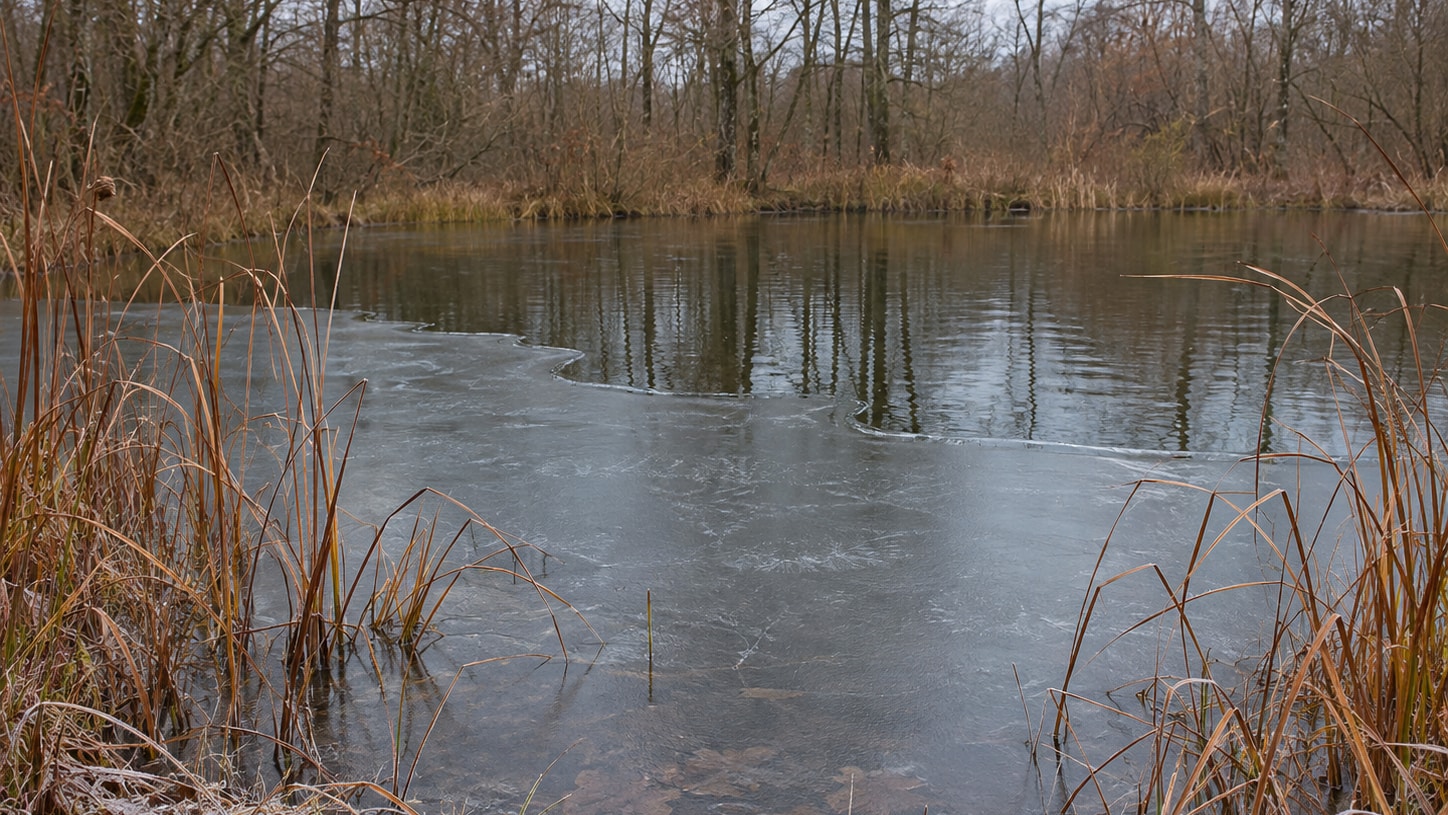
The first ice on a quiet pond can look like a strip of dull glass along the shore. Out beyond it, the water may still ripple in the wind. Even when the ice spreads across the pond, there can be liquid underneath it.
The reason starts with the way freshwater changes as it cools. Liquid freshwater is at its densest near 4°C (39°F), a few degrees above the freezing point. Density describes how much mass fits into a given volume. At about 4°C, the same cup holds slightly more mass than it would at a warmer temperature or just before freezing. USGS field manual on freshwater density
The coldest water can stay on top
In fall, water at the surface loses heat to the air. As it cools toward 4°C, it becomes denser and can sink through warmer water. Wind can help mix the pond while it’s still open.
Below about 4°C, the pattern reverses. Further cooling makes freshwater slightly less dense, so water close to freezing can stay above the somewhat warmer water beneath it. The surface can then freeze while deeper water stays liquid. The exact temperatures at depth vary with the pond and the weather. USGS field manual on lake temperature and mixing
Once ice forms, it stays at the surface
When water freezes, its molecules settle into an open crystal structure. The same mass takes up more space, so solid ice is less dense than liquid water and floats. It’s the same reason the top of an ice cube sticks out of a glass. NASA on why ice floats
These are two distinct steps. Very cold liquid water can sit above denser water, and the ice that forms there can float. In a pond, that leaves room for a layer of liquid below the ice. At the table, it puts the ice in your glass right where you can see it.
Editorial · not medical advice