
What You're Actually Tasting in Water
Water is supposed to taste like nothing. It does not. What you taste comes from a short list of measurable things, and it is the reason two waters can taste completely different in the same glass, on the same afternoon.
Editorial · not medical advice
Most people assume water is a blank, that one is basically the same as another and none of them really has a flavor. Then they drink two side by side and notice one feels round and full while the other feels thin and sharp.
That difference is not in your head. It comes from a handful of things that can be measured, and once you know what they are, you cannot untaste them.
Water Is Not Actually Tasteless
The idea that water has no taste mostly describes a laboratory ideal. Water with nothing dissolved in it, like distilled water, comes close to flat, and many people find it dull or even faintly off. As soon as water carries something dissolved in it, it starts to have character.
So tastelessness is the exception, not the rule. Almost any water you actually drink has a flavor, whether or not anyone designed it that way.
Minerals Are the Main Event
The biggest driver of how water tastes is its dissolved minerals. Calcium, magnesium, bicarbonate, and sodium give water body, weight, and subtle flavor, the qualities tasters describe as structure or mouthfeel. If you want the detail on what those minerals are and where they come from, that is its own story.
In broad terms, a water with more dissolved minerals tends to taste fuller and rounder. A water stripped down close to nothing tends to taste thin. The mineral profile is most of the fingerprint.
Temperature Changes Everything
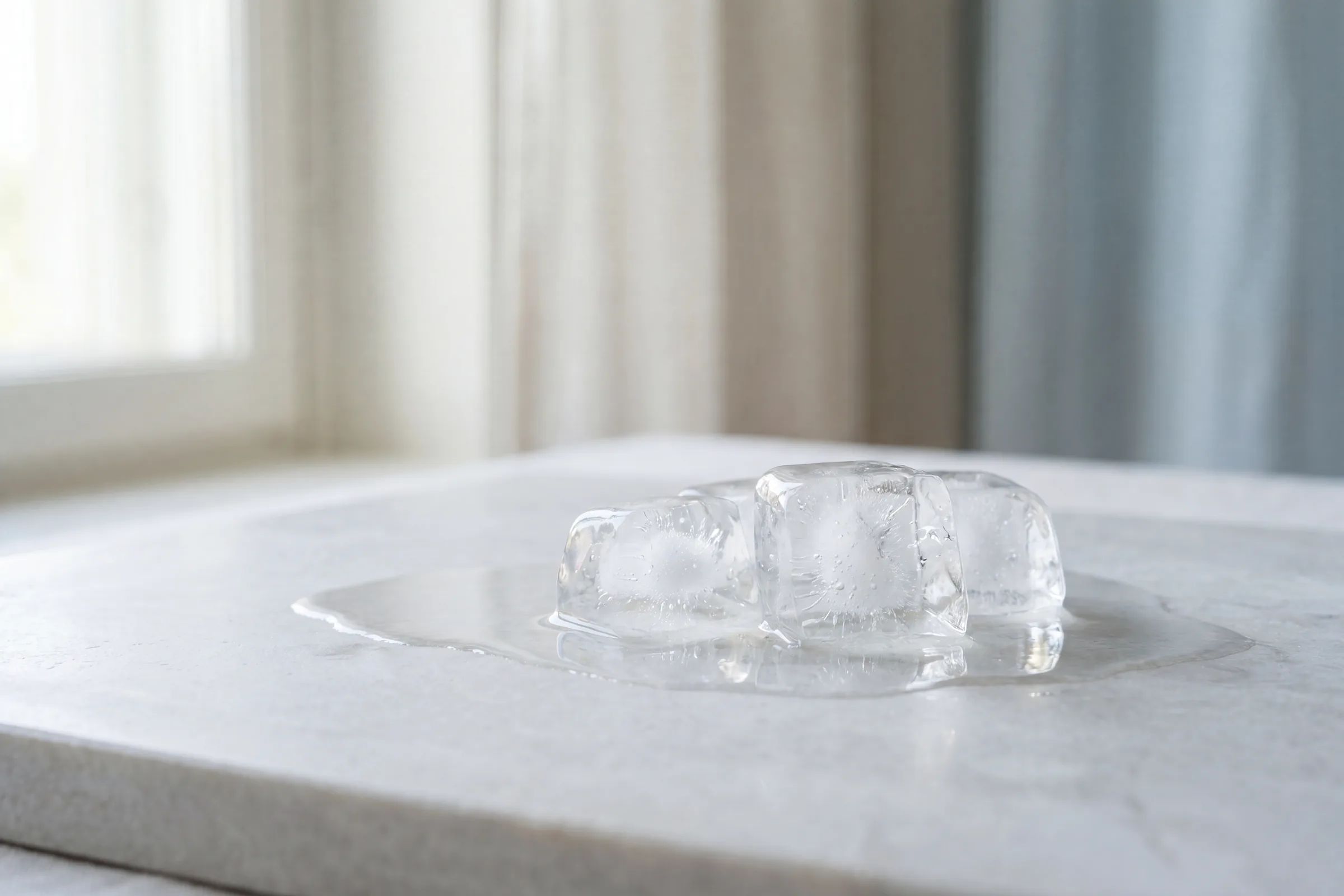
How cold the water is changes how it tastes, sometimes dramatically. Cold water mutes flavors and reads as crisper, which is why most people prefer it chilled. As water warms, it reveals more of its mineral character, along with any off notes it might carry.
This is why the same water can taste like two different things from the fridge and at room temperature. It is also why serious tastings are run at a controlled temperature, so the water is judged on the same terms every time.
The Quieter Factors
A few other things shape the experience. Dissolved gases matter: carbonation adds bite and a touch of acidity, and the level of dissolved gas affects how fresh a still water feels. pH plays a smaller part in perceived taste than its reputation suggests, and it is only one variable among several rather than the headline.
There is no such thing as the taste of water in general. There is only the taste of a specific water, shaped by what is dissolved in it and how cold it is when it reaches you.
Why Stripped Water Tastes Flat
Reverse osmosis and distillation remove the minerals that give water its character, so the result often tastes flat or thin. This is part of why some brands add minerals back after processing, not only for content but for flavor. The taste you associate with a good glass of water is, to a large degree, its mineral profile doing the work.
Where Unbelievable Water Fits
Unbelievable Recovery is mineral water drawn from a deep-sea source 510 meters below the surface off Sokcho, South Korea. Its mineral profile comes from the source, which is what gives it weight and taste in the glass, rather than a flavor assembled after the fact.
What the water actually contains is confirmed by accredited third-party testing, not assumed. It is best served cold, where its mineral character comes through most clearly.
More from the Journal
Stewardship
Beverage Packaging Has Entered a New Accountability Era
California and the EU are changing packaging requirements on different schedules. Here is what the rules measure, and what a bottle’s label can actually establish.
Water Science
WHO’s 2026 Drinking-Water Update Looks Beyond the Final Test
WHO’s June 2026 update gives small water supplies more attention and strengthens practical guidance on preventing contamination.