Body + Mind
The Water Difference Between Grapes and Raisins
Fresh grapes and raisins show how drying changes the water in food. A smaller, lighter snack brings a different amount of moisture to your day.
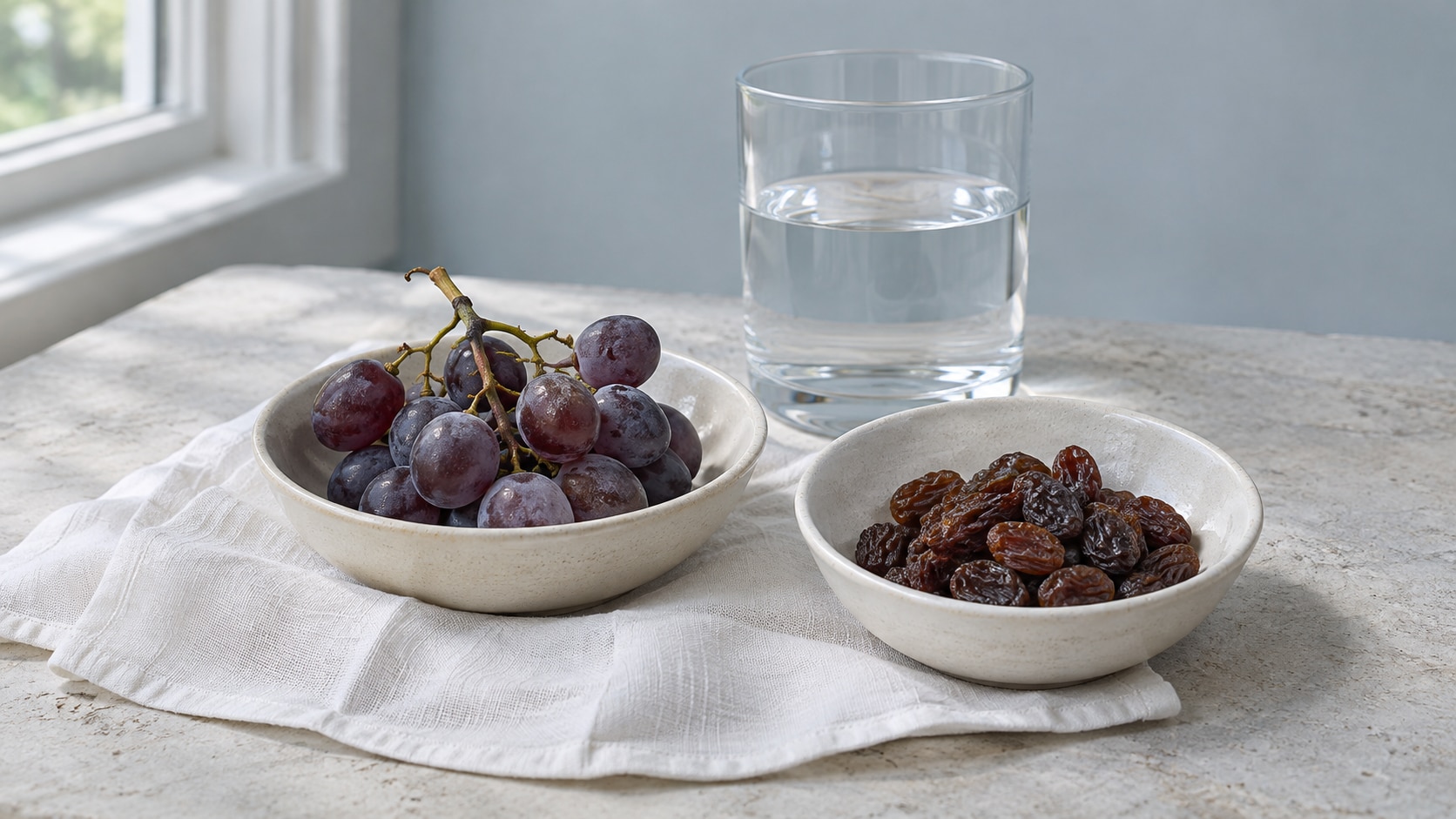
A grape is plump; a raisin fits into a much smaller space. Water accounts for much of that difference. Drying removes moisture from fruit, changing both what it weighs and how much water it contributes when you eat it.
That makes grapes and raisins a useful pair for understanding a familiar hydration point: food contains water, but its contribution depends on the food and how it has been prepared.
What leaves during drying
The Food and Agriculture Organization’s guide to dried fruit describes drying as removing most of the water from fruit and vegetables. Losing that water reduces weight and bulk, which helps explain why dried fruit is convenient to carry.
A separate FAO processing guide explains the role of airflow, temperature and humidity in removing water from the food’s surface. The result is a food with much less moisture. “Dried” does not necessarily mean that every trace of water has gone.
Compare the same weight
USDA’s Standard Reference Release 28 provides an illustration. Its entries for raw red or green European-type grapes and seedless raisins report the following amounts per 100 grams of edible food:
| Food | Water per 100 g |
|---|---|
| Raw grapes | 80.54 g |
| Seedless raisins | 15.43 g |
Source: USDA fruit composition tables, entries 09132 and 09298.
These are separate reference entries, not measurements of one batch before and after drying. They illustrate a moisture difference rather than a guarantee for every variety or packet. The 100-gram basis makes the weights comparable; it is not a suggested serving size. Comparing equal handfuls would add another variable: how much food each handful holds.
Keep drinking water in the plan
The CDC includes foods, especially many fruits and vegetables, in daily fluid intake. It also notes that most daily water intake comes from water and other beverages.
The figures above measure moisture in food. They do not rank overall nutritional value or measure how quickly a person becomes hydrated after eating it. Our guide to daily water intake explains why food, drinks and individual circumstances all belong in the picture.
For a walk or a long drive, dried fruit may be an easy snack to pack. The water removed during drying will not be coming along with it. Keep drinking water accessible alongside the food you choose.
Editorial · not medical advice