Body + Mind
How to Clean Your Reusable Water Bottle
The lid, the threads and the time spent drying all deserve a place in your bottle-cleaning routine. Here’s how to make the next refill a little easier.
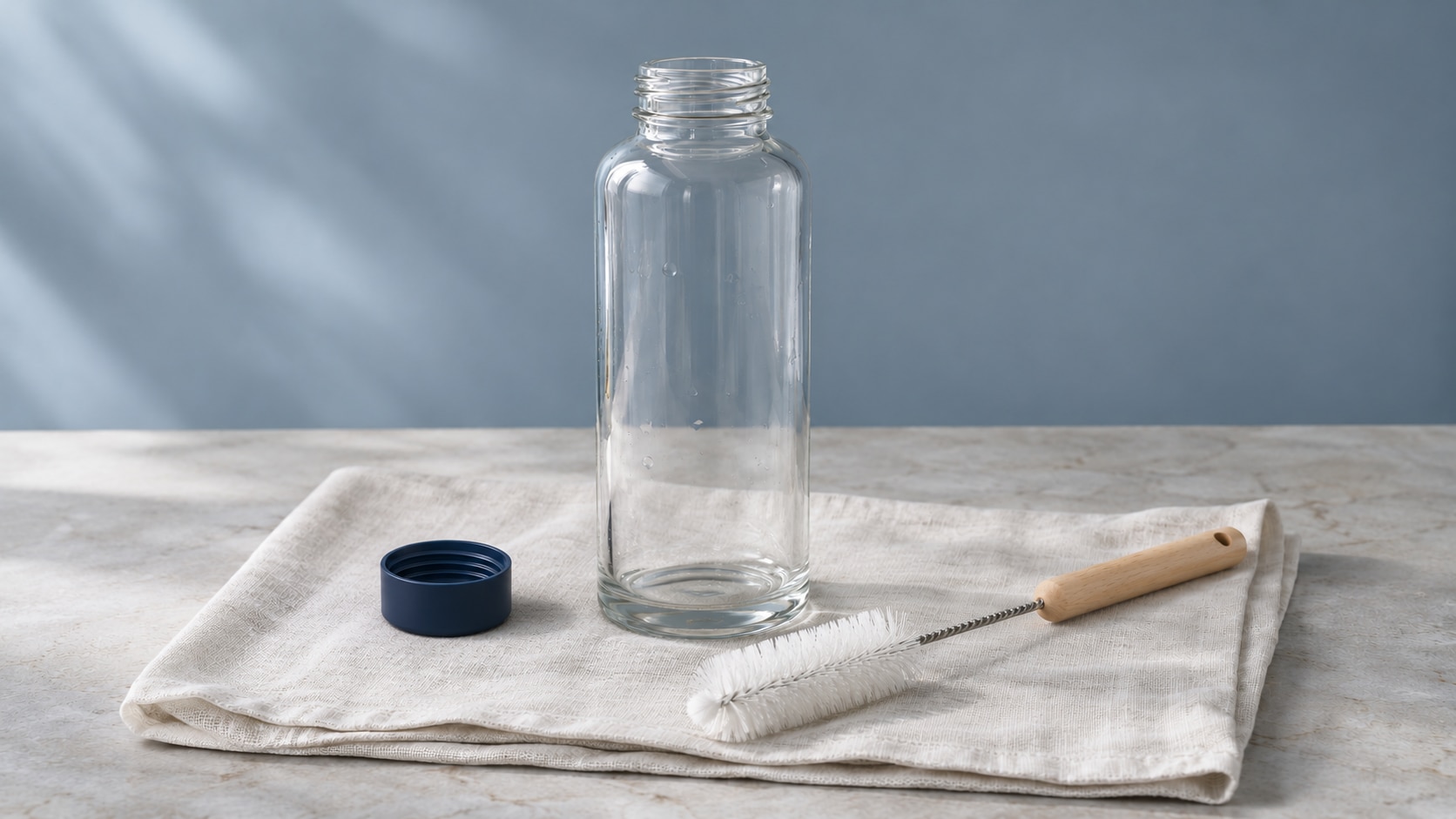
An empty bottle often goes straight from the bag to the tap. Fill it, close it, put it back by the door. When you use the same bottle all day, it can be surprisingly easy to carry yesterday’s washing-up into tomorrow.
Give the bottle a regular place among the dishes. Purdue Extension recommends washing after each use, or daily when you refill throughout the day. That’s a useful starting point for a reusable bottle that travels between your desk, bag and kitchen.
Take the lid seriously
Set the lid beside the bottle before washing. Check the maker’s care instructions for any removable seals, mouthpieces or straws, and take apart only the pieces designed to come apart. A lid with several parts needs a little more attention than a plain screw cap.
North Dakota State University Extension advises cleaning under lid gaskets and around crevices, as well as washing reusable bottles and straws daily. The opening you drink from belongs in the wash too. Work around the threads rather than stopping at the smooth outside of the cap.
Reach the inside, then rinse
Use dish soap, water and a bottle brush that reaches the bottom. Scrub the inside and clean the detached pieces, then rinse them thoroughly. Purdue’s guidance includes the small recesses in bottle parts; a quick pass around the neck can leave those places untouched.
If you use a straw, choose a brush that fits inside it. NDSU includes reusable straws in its daily cleaning advice. Keep the bottle’s own instructions handy for any special materials or parts.
A dishwasher can be convenient when the manufacturer says the bottle and its components are suitable for it. Check each part before loading it; don’t assume that every piece can take the same treatment.
Leave time to dry
Let the washed pieces dry before closing everything up. Purdue specifically advises letting the bottle dry completely before reassembling it. Put the separate lid somewhere it can dry as well, rather than screwing it back onto a damp bottle for storage.
An evening wash can leave room for that last step before the next morning’s refill. If your bottle usually stays at work, take it home with the lunch container or choose another moment when washing and drying are practical. Our workday water-break guide has more ideas for finding a cue that fits your day.
The next time you pack the bottle, check for all its pieces: a washed body, a clean lid and enough drying time before it goes back together.
Editorial · not medical advice