Our water
What Changes 510 Meters Below the Surface
At roughly 510 meters, ocean conditions differ from the surface. Depth explains part of a source’s environment; treatment and sample-specific testing explain the bottled water.
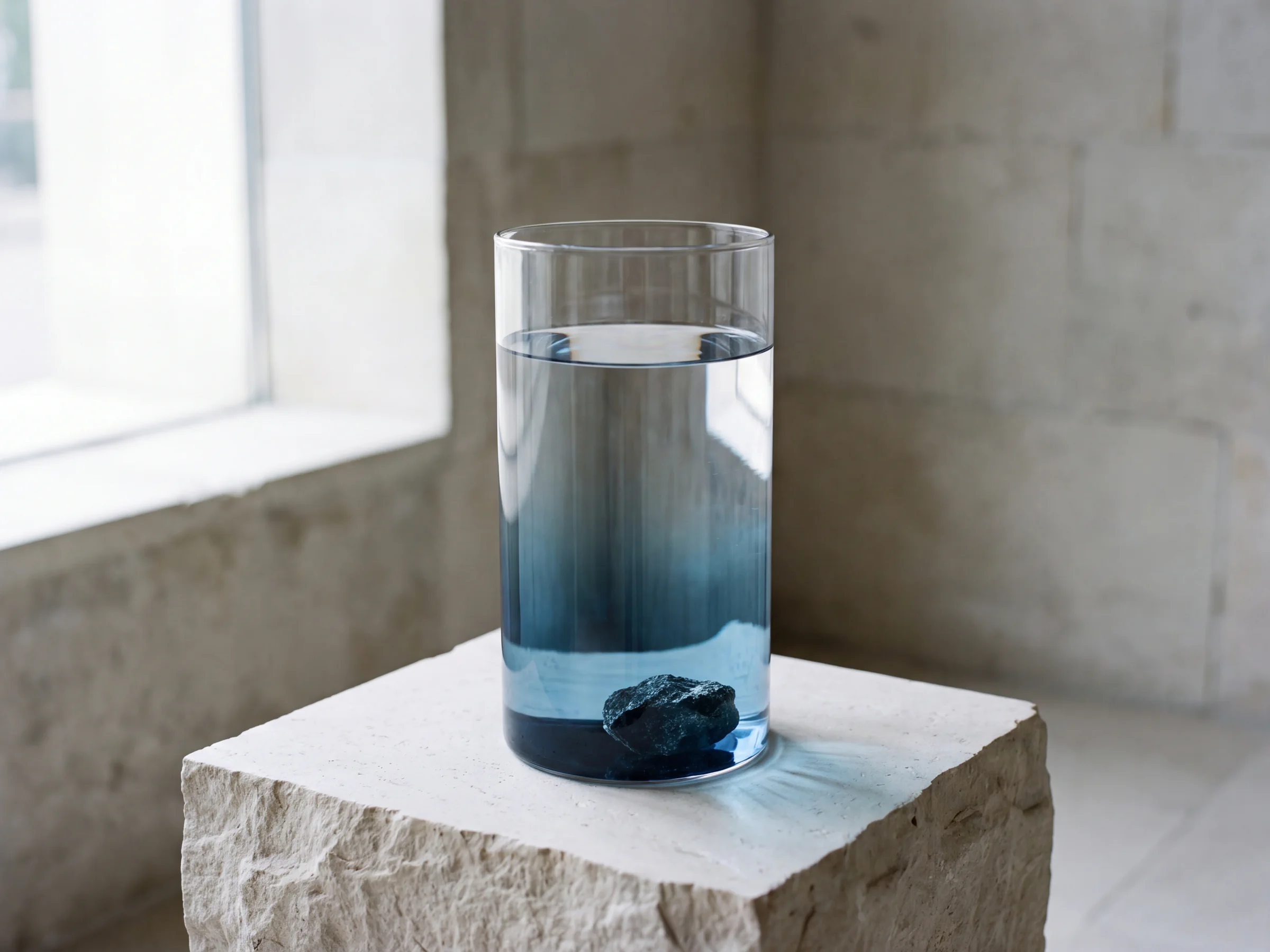
Five hundred and ten meters is approximately 1,673 feet. It is the published intake depth for Unbelievable Recovery Water off Sokcho, South Korea, in the East Sea. That gives a source location a useful dimension. It does not tell us everything about the water.
To understand what depth means, separate three questions: What generally changes as you descend through the ocean? What has been measured at this particular intake? What is present in the finished bottled sample?
Less light, different conditions
Light diminishes rapidly with depth. NOAA describes the 200-to-1,000-meter band as the twilight zone: light is faint, and conditions differ substantially from the sunlit surface. Calling all water at 510 meters completely untouched by sunlight would be too absolute.
Temperature also changes with depth. A thermocline is a region where temperature falls relatively quickly, but its depth and strength vary with location and season. A general ocean diagram cannot establish the exact year-round temperature or thermocline position at an individual intake. NOAA’s thermocline explanation
The deep ocean still moves
Density differences associated with temperature and salinity help drive deep circulation. Winds, tides and other processes move water too. Layers can resist mixing without forming a sealed barrier. NOAA’s guide to ocean currents
This matters when reading a source claim. Depth alone does not prove that human-made substances cannot reach the water. It also does not assign an age to the water in a bottle. An age estimate would need a defined measurement or oceanographic model for the source being described.
Source water and drinking water are different stages
Seawater contains dissolved salts. Its source composition is not the same question as the composition of a finished drinking water after treatment.
The dated manufacturer inspection records magnesium, calcium, potassium and sodium in an Unbelievable sample. Those measurements are more informative for a bottle comparison than assuming a final mineral profile from intake depth. They do not establish superior absorption or a medical recovery effect.
The exact handling of minerals during production requires process documentation. “Contains minerals” also does not, by itself, establish the FDA-defined category “mineral water.” Our label guide explains the source requirements behind that term.
Follow the source story into the evidence
Our Why Recovery page introduces the East Sea source and everyday Recovery positioning. The testing page supplies dated, sample-specific results and their limits.
Read those as two parts of the story. The intake depth locates the beginning. The product records help explain what was measured later, after the water’s journey to the bottle.
Editorial · not medical advice