Our water
How Unbelievable Water Protects Quality From Source to Bottle
Source information, production checks and laboratory reports answer different questions. A guide to the dated records behind Unbelievable Recovery Water.
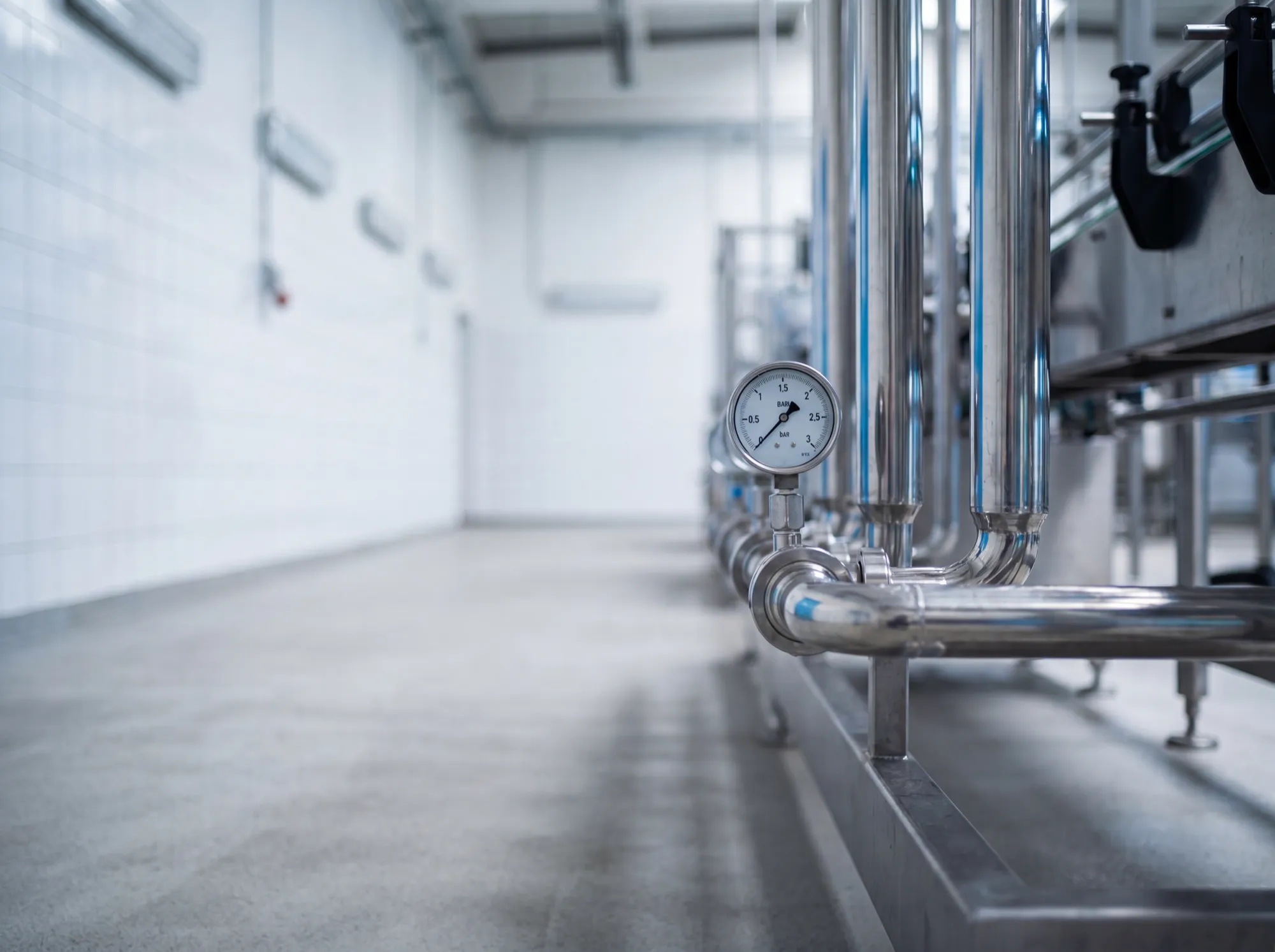
A bottle reaches you at the end of a longer process. Its source, treatment, filling and storage all matter. The useful way to explain quality is to show what each record covers and when the work took place.
For Unbelievable Recovery Water, the available records include a manufacturer’s production inspection and separate laboratory analyses. They are complementary records, with different samples and purposes.
Begin with the source
Recovery’s published source is the East Sea off Sokcho, South Korea, at approximately 510 meters, or 1,673 feet. Our source journey introduces that provenance.
Depth does not establish the safety of finished bottled water. Ocean water circulates, and a source description cannot replace information about treatment and the bottled sample. Nor should “deep-sea water” be read as untreated seawater ready to drink.
Details about desalination, mineral concentration or recombination require the manufacturer’s process specification. The laboratory reports summarized here do not establish those steps. Contact us if a process detail is important to your purchase or professional review.
What the production inspection records
The manufacturer’s inspection covers production on August 5, 2025, confirmed on August 8. It records four checks during that day, at 9:00, 10:30, 13:00 and 14:31. These are observations of a historical lot, not a claim that the same measurements describe today’s inventory.
The checks include pH, turbidity, mineral concentrations, fill volume, closure torque, color and foreign material. The record also lists microbiological results and inspections of storage, identification and wrapping. Its separate pathogen-testing section refers to an August 4 sample.
For example, the recorded fill volumes range from 505.74 to 507.21 mL, against that inspection’s printed criterion of 500 ±10 mL. Closure torque is recorded in kg·cm. Those measures concern the package and filling operation; they are not contaminant concentrations.
The lot’s printed expiration date is August 4, 2026. The record remains useful evidence of that inspection, but should not be presented as a release certificate for a current lot. See the dated manufacturing record summary.
Independent analyses have their own scope
The testing summaries separate several kinds of evidence:
- The Gangwon water-quality report covers a July 24, 2025 sample, issued August 6, with 53 listed tests and the Korean criteria printed in that report.
- KIAST’s August 21, 2025 microplastics report covers a 2.5 L sample and particles greater than 45 µm.
- Microbac’s October 31, 2025 report concerns nutritional analysis of its received sample.
- Eurofins job 380-188240-1 contains preliminary results generated December 29, 2025 for a sample collected December 10.
A result for one sample does not establish every production lot’s condition. A manufacturer inspection is also different from a laboratory analysis, a facility registration or a product certification.
Read the limits alongside the results
“ND” needs the report’s definition and relevant limit. A PFAS panel examines named compounds. A microplastics method examines a defined particle range. Some results are measurements, some are less-than values, and some carry quality-control flags.
The testing-summary guide explains those distinctions. They prevent a collection of favorable findings from becoming the unsupported statement that every possible contaminant was absent.
For a current-lot or procurement question, ask for the applicable product record, its date and its status. A useful quality explanation should let you follow the evidence from the question to the right document.
Editorial · not medical advice